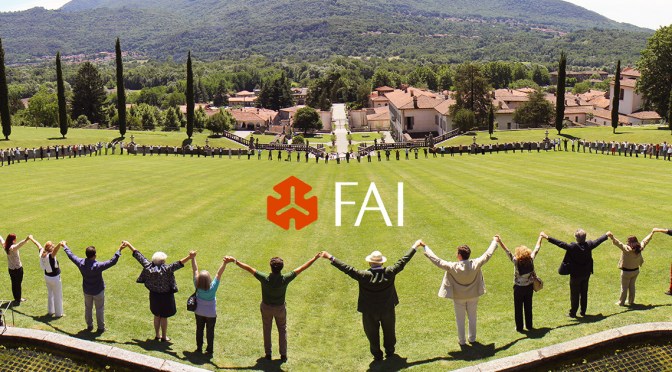
Domani 27 Marzo prosegue l’appuntamento primaverile del Fondo Ambiente Italiano, arrivato ormai al suo trentennale tra storia, arte e natura.
Oltre 700 luoghi inaccessibili o poco conosciuti in 400 città, per riscoprire e condividere i valori del vivere civile insiti nella bellezza di un patrimonio culturale che non ha eguali.
Giornate FAI di Primavera: Sabato 26 e domenica 27 marzo 2022
FAI Spring Days are going on this spring week-end; thus helping visitors discover a hidden and beautiful Italy.
A fascinating thirty-year-long travel where History, Arts and Nature have had a leading role in both, rediscovering and sharing our civil life values over time; thanks to more than 700 extraordinary places usually closed to the public and located in 400 cities all over Italy.
La “Maddalena giacente” del Canova e la sorpresa milionaria per un’ignara coppia Inglese
Una coppia inglese, una villa di campagna, un capolavoro della storia dell’arte che si credeva perduto. Lo scenario di un nuovo romanzo? Ebbene no, perchè a volte la realtà può riuscire a compiere delle cose straordinarie; e lo fa proprio quando meno te lo aspetti.
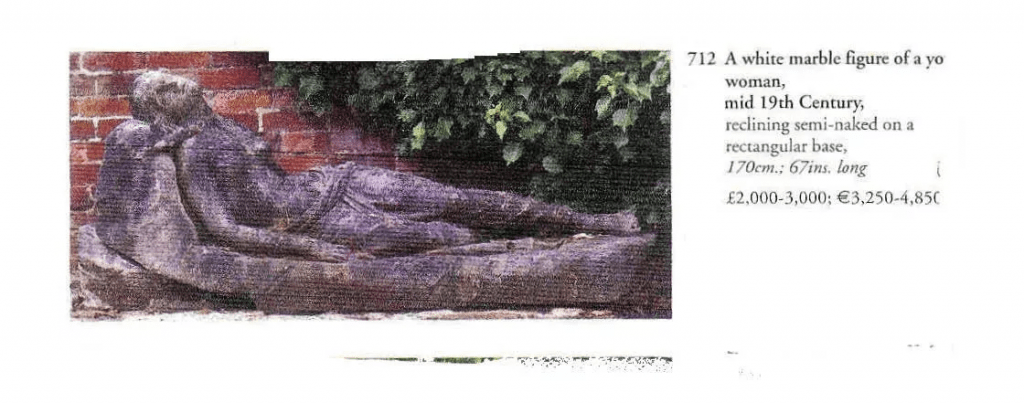
Antonio Canova, Maddalena Giacente (Recumbent Magdalene), 1819–22, as it appeared in the auction catalogue for its 2002 sale at Sotheby’s Sussex, where it fetched just £5,200 ($7,540).
Fu ad un’asta di statue ed arredamento per esterni dove la coppia in questione acquistò, per 5.200 sterline (circa 6.200 euro), un’elegante scultura in marmo volta ad adornare il parco della loro villa. Mai avrebbero immaginato che quella statua, raffigurante una splendida donna reclinata, vent’anni dopo si sarebbe rivelata nientemeno come la perduta “Maddalena giacente”; un’opera autentica di Antonio Canova di cui si erano perse le tracce da tempo.
«(Canova) Mi portò a vedere la sua ultima Maddalena, che è divina: giace distesa nel completo abbandono del suo dolore, e l’espressione del suo viso, e la bellezza del suo corpo… sono perfezione».
(Thomas Moore – scrittore, poeta e paroliere del tempo – Novembre, 1819, in “Memoirs, Journal and Correspondence” pubblicato nel 1860).
Commissionata nel 1819 da Robert Banks Jenkinson, duca di Liverpool e primo ministro inglese dal 1812 al 1827, e terminata tre anni dopo, poco prima della morte dell’artista, la scultura è stata più volte venduta all’incanto; nonchè esposta in numerose mostre pubbliche del Regno Unito. Successivamente se ne persero a lungo le tracce, sebbene in realtà riapparve in vendita più volte senza attribuzione alcuna, fino ad oggi, ben 200 anni dopo il suo completamento; nell’anno in cui si celebra il bicentenario della scomparsa dell’autore.
Ne annuncia la riscoperta la casa d’aste inglese Christies, che offrirà la “Maddalena giacente” il prossimo 7 luglio a Londra, dopo una breve prevendita che avverrà tra il 2 ed il 7 Luglio; con una stima di partenza di 5-8 milioni di sterline (6-9,5 milioni di euro).
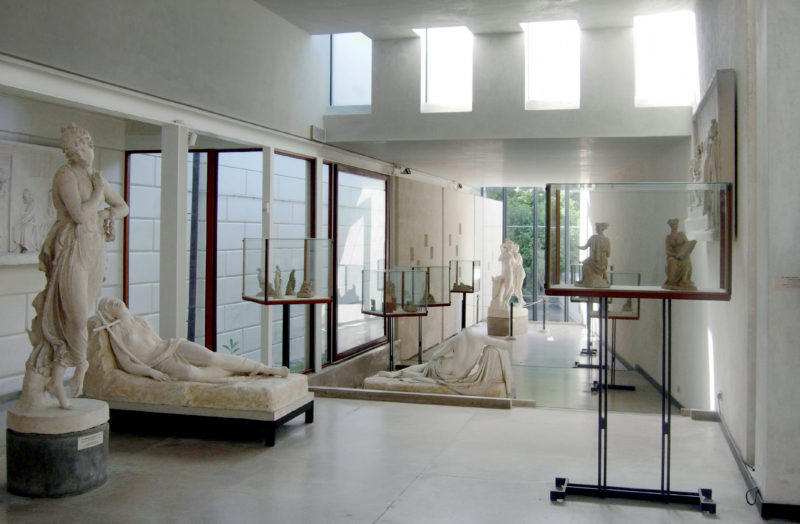
Il modello in gesso della statua è conservato nella Gypsotheca e Museo Antonio Canova di Possagno (Treviso), ed è datato “1819 nel mese di settembre”.
Il modello in gesso della “Maddalena giacente” è visibile sulla sinistra, Ala Scarpa verso le Grazie, Gypsotheca e Museo Antonio Canova di Possagno (Treviso)
Thomas Moore, “Memoirs, Journal and Correspondence of Thomas Moore”, Edited and abridged from the first edition by the Right Hon. Lord John Russell, Longman Green Longman and Roberts, London, 1860. Provenienza dell’originale: The British Library, digitalizzato il 30 apr 2014.
Canova’s Lost “Maddalena Giacente” Comes Back to Light in U.K. 100 Years After Oblivion
A Wonderful Surprise for the Whole World and for a Lucky Unaware British Couple.
An English couple, a warm-hearted villa and a lost masterpiece… “Is that the plot of the newest bestseller novel?” you may ask. No, Sir and Madam, not at all. That’s because, as a matter of fact, reality can be even more extraordinary than fiction when you least expect it.
A fine marble sculpture representing a laying-recumbent woman was sold in a Garden Statuary andArchitectural Items sale on 2003. In fact, a British couple paid 5,200 pounds for what they considered a beautiful and elegant statue at that time, just aiming to decorate their own villa; so that having no idea how important it would have been actually. Since then, it took about 20 years to find out what a masterpiece the own, and who the real author is; so that becoming conscious of having been lived side-by-side with one of the finest artworks by the Italian Neoclassical sculptor Antonio Canova.
“(Canova) Took me to see his last Magdalen, which is divine: she is lying recumbent in all the abandonment of grief; and the expression of her face, and the beauty of her figure . . . are perfection”
(Thomas Moore, Irish writer, poet, and lyricist of the time, November, 1819, in “Memoirs, Journal and Correspondence”, published in 1860).
The “Maddalena giacente” (Recumbent Magdalene), a splendid marble depicting a laying-recumbent Lady Magdalene, was commissioned by Lord Liverpool (the British prime minister between 1812-1827) in 1819, and took three years to carve; thus being in fact completed just before Canova’s death in 1822. Afterward, the sculpture had been on both sale and display all over the U.K. more than once; up to even loosing attribution for about 100 years before the authorship and significance of it would have been finally re-established just by chance.
That important Christies’ landmark re-discovery will be part of a pre-sale view from 2 to 7 July (estimate: £5,000,000-8,000,000), just before its auction sale on 7 July; thus sharing a fitting celebration of Canova’s brilliance in the bicentenary year of his death.
The Canova’s plaster model preceding his astonishing marble masterpice is now held at the Canovian Gypsotheca and Museum in Possagno, Italy, dated “1819 in the month of September”.
L’immagine tipica della vita moderna vede le persone correre qua e là, indaffarate ad osservare il proprio smartphone piuttosto che l’i-pad mentre parlano apparentemente da soli grazie all’ultimo auricolare bluetooth di tendenza o ai più modaioli orologi smart; magari appena scesi dalle loro automobili iper-accessoriate indossando abiti eco-friendly di nome ma non sempre nei fatti.
Una “fotografia” che, di primo acchitto, sembra ritrarre uomini e donne proiettati nel futuro, ma che ad uno sguardo più approfondito, rivela in realtà quanto essi siano irrimediabilmente persi nel passato. Un passato fatto di schemi lineari provenienti dall’800 che non combinano con le potenzialità di oggi, a meno di voler accorciare volutamente la vista alla mera mentalità del massimo guadagno oggi a tutti i costi e, come si suol dire, “in barba a chi rimane”.
L’economia, quella vera, dovrebbe guardare sempre avanti; senza paraocchi griffati o false chimere che gettano fumo negli occhi per ottenere questo o quel tornaconto mascherandolo come necessaria utilità. D’altronde, è un fatto assodato che noi, esseri umani, viviamo e respiriamo grazie agli “escrementi” delle piante; ossia grazie a quella circolarità della Natura che nulla scarta e tutto riutilizza.
“Circolarità” vuol dire che un prodotto dovrebbe essere disegnato e concepito per essere smontato e riutilizzato alla fine della sua vita. Un concetto così rivoluzionario, eppure così longevo e familiare.
Ce lo spiega molto bene in questo video il fisico e divulgatore scientifico Valerio Rossi Albertini illustrando come, l’applicazione di una tecnologia risalente a più di un secolo fa, grazie alla maturazione odierna consentirebbe, oggi, di eliminare l’inquinamento dei grandi centri urbani; rivoluzionandone mobilità e stile di vita.
«Siamo già senza saperlo nell’era dell’economia circolare. Questa è una rivoluzione in atto, un vento di cambiamento si stà sollevando, ed un proverbio cinese dice che “quando c’è vento di cambiamento, sono due le disposizioni di spirito possibili: lo stolto innalza un muro per proteggersi, il saggio inizia a costruire mulini a vento”.» Valerio Rossi Albertini
L’economia circolare è una necessita a cui non possiamo più rinunciare, #ripensiamoci, #cogitoergoredivivus, #pensoquindiriciclo
People running here and there, getting by smartphones and i-pads while talking with the most updated bluetooth headsets and smart-watches; maybe just getting out of their full-optional cars wearing more or less eco-friendly stylish clothes.
As a matter of fact, the “picture” above depicts quite well what we consider a “modern way of living” nowadays. However, that imagine couldn’t be further from the truth. In fact, that kind of lifestyle reveals how backward-looking we are in some way, following outdated nineteenth-century linear schemes for industrial processes that doesn’t match actually with modern knowledge and resources; and maybe just looking for the maximum economic advantage in the short term in spite of having a farsighted approach.
Certainly, a long term strategy is essential for an effective production system; as neither “branded blinkers” nor “misleading Chimeras” will success in concealing inappropriate personal gains. Besides, our own life depend on a big circular system where Nature is able to recycle anything; so much that without plant waste we couldn’t even breath.
In fact, pursuing a circular production scheme means obtaining products that are both, conceived and designed for being dismantled and recycled at the product’s end-of-life. That’s such a revolutionary but ancient concept we can’t go on ignoring anymore.
With this in mind, the Physicist and Scientific populariser Valerio Rossi Albertini explanes how we could get rid of pollution combining a one-hundred-year-ago technology with modern developments; thus revolutionising both mobility solutions and lifestyle in the biggest urban centres (please, see the video in the Italian version above).
«As a matter of fact, we have been unconsciously in the circular-economy era for quite a long time by now. Such a revolution is just taking place, as a real wind of change is blowing. Consequently, as the chinese proverb says: “when the wind of change blows, some build walls, while others build windmills”.» Valerio Rossi Albertini
Circular Economy is an urgent need we can’t give up anymore, #rethinkrecycle
Il XIX secolo è stato un periodo di grandi trasformazioni sociali, politiche, culturali ed economiche. Un epoca in cui la scienza e la tecnologia hanno cominciato a muovere i loro primi passi, con invenzioni e metodologie scientifiche che, in pochissimi secoli, avrebbero cambiato letteralmente il nostro modo di vivere.
Si pensi alla celluloide, al frigorifero elettrico, al cemento armato, al telefono (dell’italiano Meucci), al fonografo, al microfono, al motore elettrico ed alle lampade elettriche (perfezionate dall’americano Edison), ma anche al legno compensato, alla cucina a gas, al motore a benzina, ed a quello stesso cinema che nel XXI secolo, assieme alla sua parente/rivale televisione, più di un secolo dopo continua a ricordare ancora ed ancora tutte quelle piccole grandi conquiste che consentono, al giorno d’oggi, di avere in casa acqua, cibi freschi, medicinali ed energia elettrica, nonchè tutti quegli apparecchi tecnologici che ci hanno aiutato molto a migliorare la qualità della vita ma che, nel contempo, troppo spesso vengono dati per scontati e fortemente abusati; spesso a discapito di quello che ci circonda e della nostra stessa salute.
La scienza ed i suoi progressi, le innovazioni tecnologiche che permeano la vita di tutti i giorni ed il rapporto tra tecnologia ed ambiente: questa rubrica vuole essere non solo una chance in più per ricordare il percorso ed il grande sforzo di quei piccoli grandi pionieri che, inseguendo un idea piuttosto che un sogno, hanno raggiunto anche i traguardi più impensati, ma anche un’opportunità in più per approfondire i rapporti tra tecnologia ed ambiente e le loro molteplici interazioni, e magari chissà, anche un’occasione interessante per riflettere su come i piccoli grandi pionieri di oggi possano convogliare i loro sforzi verso il raggiungimento di una interazione tra tecnologia, scienza ed ambiente che possa portare al raggiungimento di uno sviluppo più sostenibile.
Perchè bisogna ricordare sempre che scienza, tecnologia ed ambiente sono legate a doppio filo; un legame nel contempo forte e delicato da cui dipende il futuro dell’umanità intera.
The 19th century was such a revolutionary period… in fact, important changes happened in both, Culture and Society, thus literally shaking up people’s lifestyle as part of an economic and political shift which had been partially due to many little but precious developments concerning Science and Technologies as well.
From celluloid to refrigerators, from reinforced concrete to the Meucci’s telephone, without forgetting the american Edison’s phonographs and the incandescent light bulbs, as well as the useful Berliner’s microphone. As a matter of fact, many useful inventions have improved our quality of life for more than a century. Even that extraordinary movie industry often celebrating those important steps forward; together with its “relative/competitor” called television.
As a result, plywood as well as gas stoves and petrol engines have changed our lifestyle in some way, together with many other technological appliances and devices making easier our daily routine. Think of tap water, fresh food, medicines and electricity; that are all common things being just at our fingertips nowadays.
However, it’s true the same that many people abuse of such instruments so much that both, the environment and our own health, are actually in real danger due to it.
On account of this, Science and Technological progress are going to be the core of a column where history and current events will be just following one another. More or less well-known pioneers following their dreams and ideas, as well as news or explanations concerning both, discoveries and step forwards, up to the symbiotic relationship among Science, Technology and Environment. In a nutshell, just one more opportunity to be familiar with such a multifaceted topic and, hopefully, a useful chance to think about how modern pioneers could realise a more soustainable development; so that people can play an active role in saving our planet.
As a matter of fact, both Science and Technology are just tide up with the Environment. So,what about taking a real chance on it? Why do not act properly to guarantee a prosperous future to human beings?
Un Natale particolare anche quest’anno, con mille dubbi e pensieri che affollano la nostra mente, e tanta voglia di riconquistare quella normalità che ogni giorno sembra allontanarsi a piccoli passi più che avvicinarsi.
Ma nonostante tutto, due cose rimangono sempre le stesse: l’affetto che proviamo per i nostri cari, e quel bambino che ogni anno viene a trovarci per ricordarci che non bisogna mai smettere di amare, e di sperare.
Tanti auguri di un sereno Natale a tutti voi da FotoArteStile
(photographs are visible in the Italian version above)
Well, another peculiar Christmas is just passed with many doubts and thoughts crowding our minds, together with a strong and unique desire to get back soon our “normality”.
However, notwithstanding the tense atmosphere that has been widespread all around the world for a couple of years now, something will be always the same: how much we love our nearest and dearest, and a little but wise Baby called Jesus who comes and visits us regularly, year after year, so that remembering us how much important both love and hope have to be; always.
FotoArteStile wishes you all a very Merry Christmas








 FotoArteStile